UR3e SimReady.
From CAD geometry to a working robotic asset.
- ROLE
- Technical art & simulation integration
- TOOLS
- OpenUSD · NVIDIA Isaac Sim · Python
- DISCIPLINES
- CAD preparation · Physics · Validation
- YEAR
- 2026
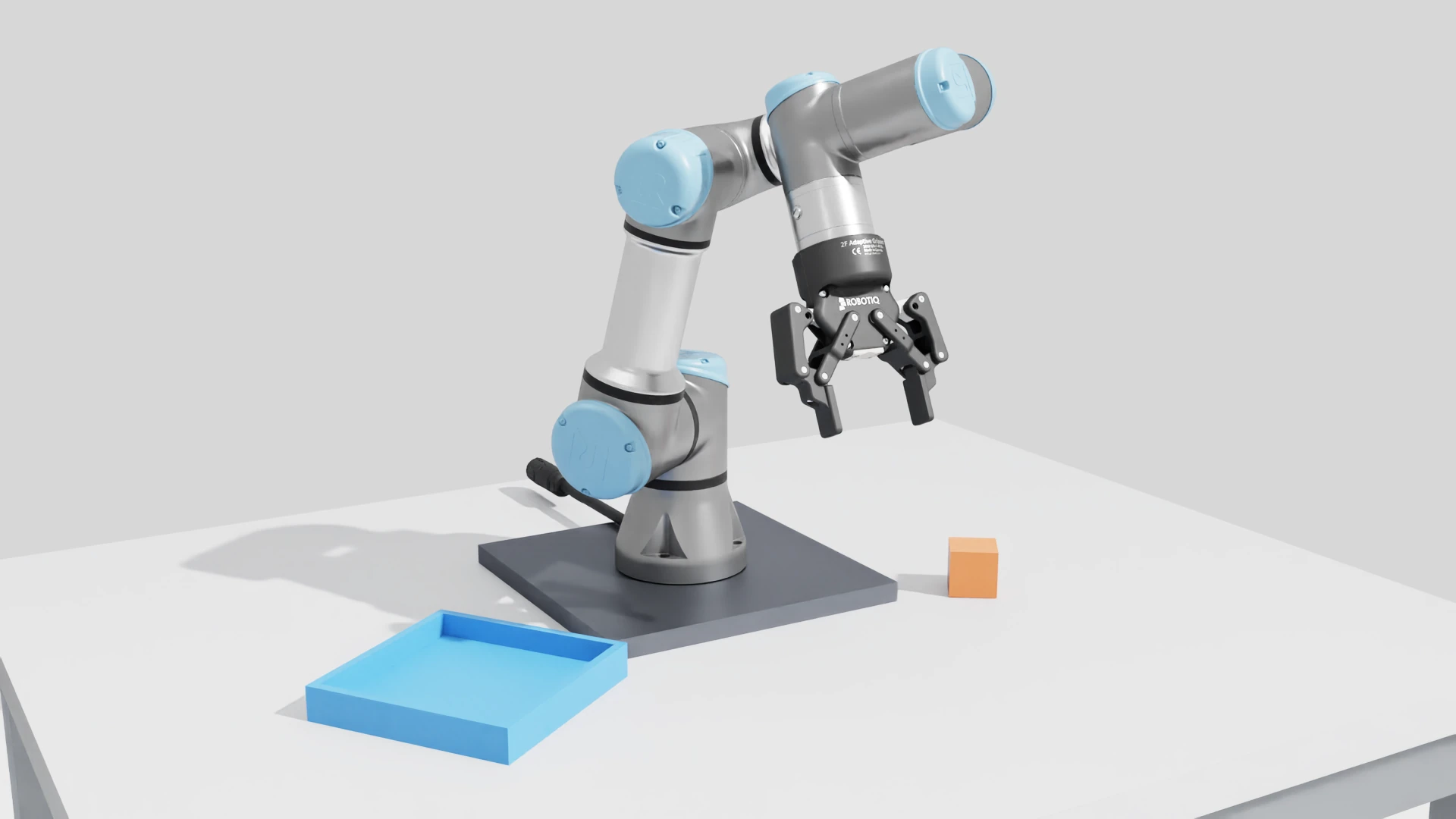
Sequence description
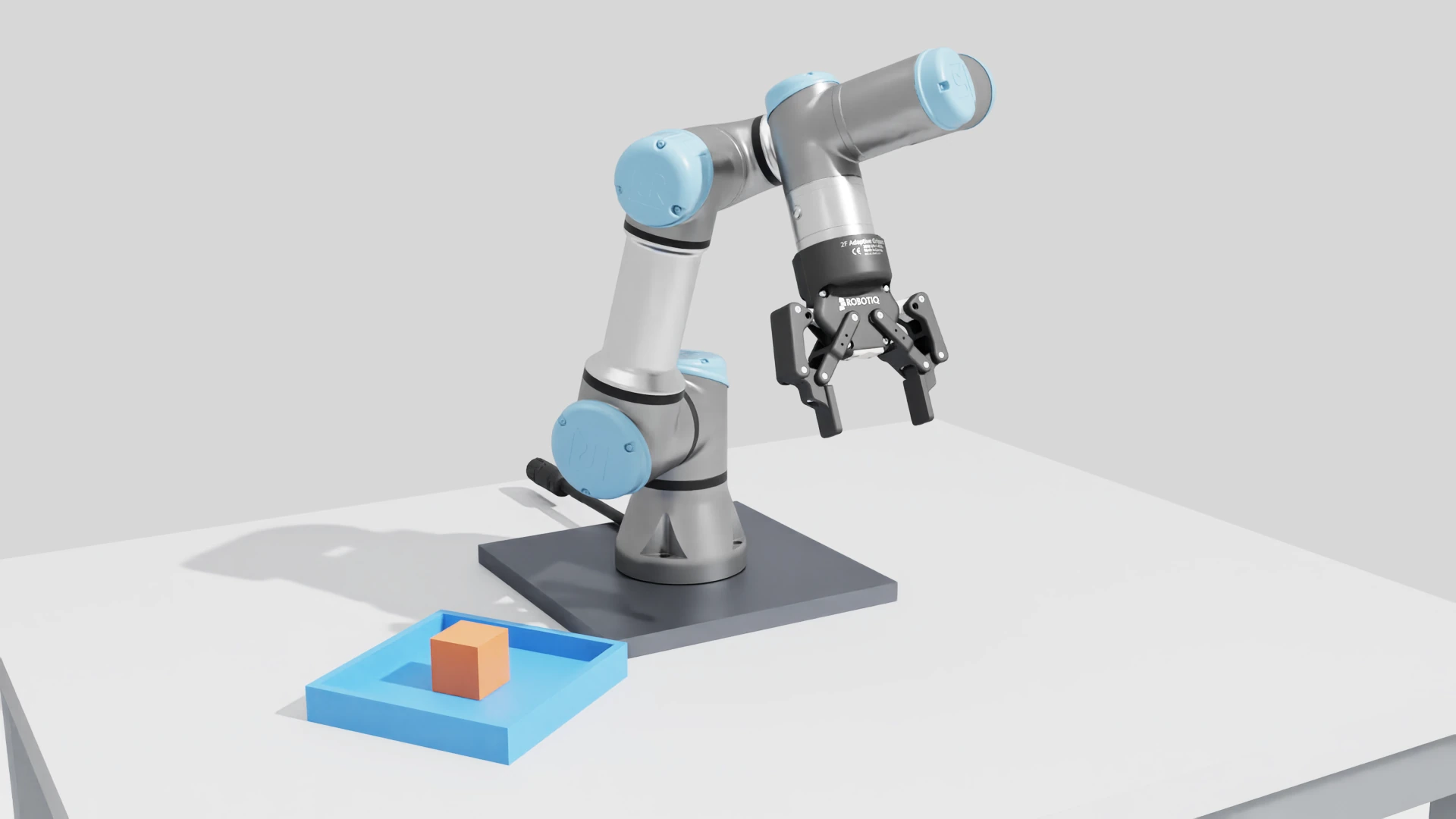
A UR3e approaches an orange cube, closes the Robotiq gripper, lifts and carries the cube across the table, opens over the blue tray, and returns home. The cube stays in the tray. The 33-second recording has no audio; motion is shown at real simulation time.
A robot that works
beyond the render.
The task was to take a CAD-derived UR3e into a simulation-ready OpenUSD workflow, then prove the asset through a physical pick-and-place sequence in NVIDIA Isaac Sim.
The arm carries a 45 mm, 40 g cube using gripper contact and friction. Joint drives move the robot; opening the fingers releases the cube. No attachment joint, kinematic hold, or direct cube-pose update carries the object.
MEASURED IN THE FINAL VERIFIED RUN
10 OCT 2026- Physical transfer
- 509.4mm
- Maximum transfer slip
- 0.038mm
- Final placement offset
- 1.30mm
- Timed segments passed
- 14/14
Horizontal cube travel
Relative to the grip frame
Horizontal distance to tray centre
32.90 s · 240 Hz physics
Source: STEP5_PROGRESS, “07_FINAL_HERO_CAPTURE — FINAL PASS”. These are simulated measurements from the documented task, not real-robot accuracy specifications.
Geometry is the beginning.
The asset needs a coherent physical description before it can be useful in a robotic task.
Prepare the visual asset
The CAD-to-OpenUSD workflow establishes the robot geometry and visual presentation as the starting point for simulation.
Define physical behaviour
Rigid bodies, collision geometry, revolute joints, mass, centre of mass and inertia form the physical description of the articulated robot.
Validate through a task
The integration references the validated Step 4 UR3e asset. Step 5 adds the official gripper, tests the combined articulation, and verifies an actual pick-and-place sequence.
03 / INTEGRATION
One composed
articulation.
The official Robotiq 2F-85 simulation asset is referenced into the UR3e workflow and mounted to the wrist with a fixed joint.
Its standalone articulation root and world pin are overridden in the integration layer so the gripper joins the arm’s articulation. The UR3e and Robotiq source assets remain separate, referenced assets.
Robotiq model: official third-party asset.
Project work: integration, debugging and validation.
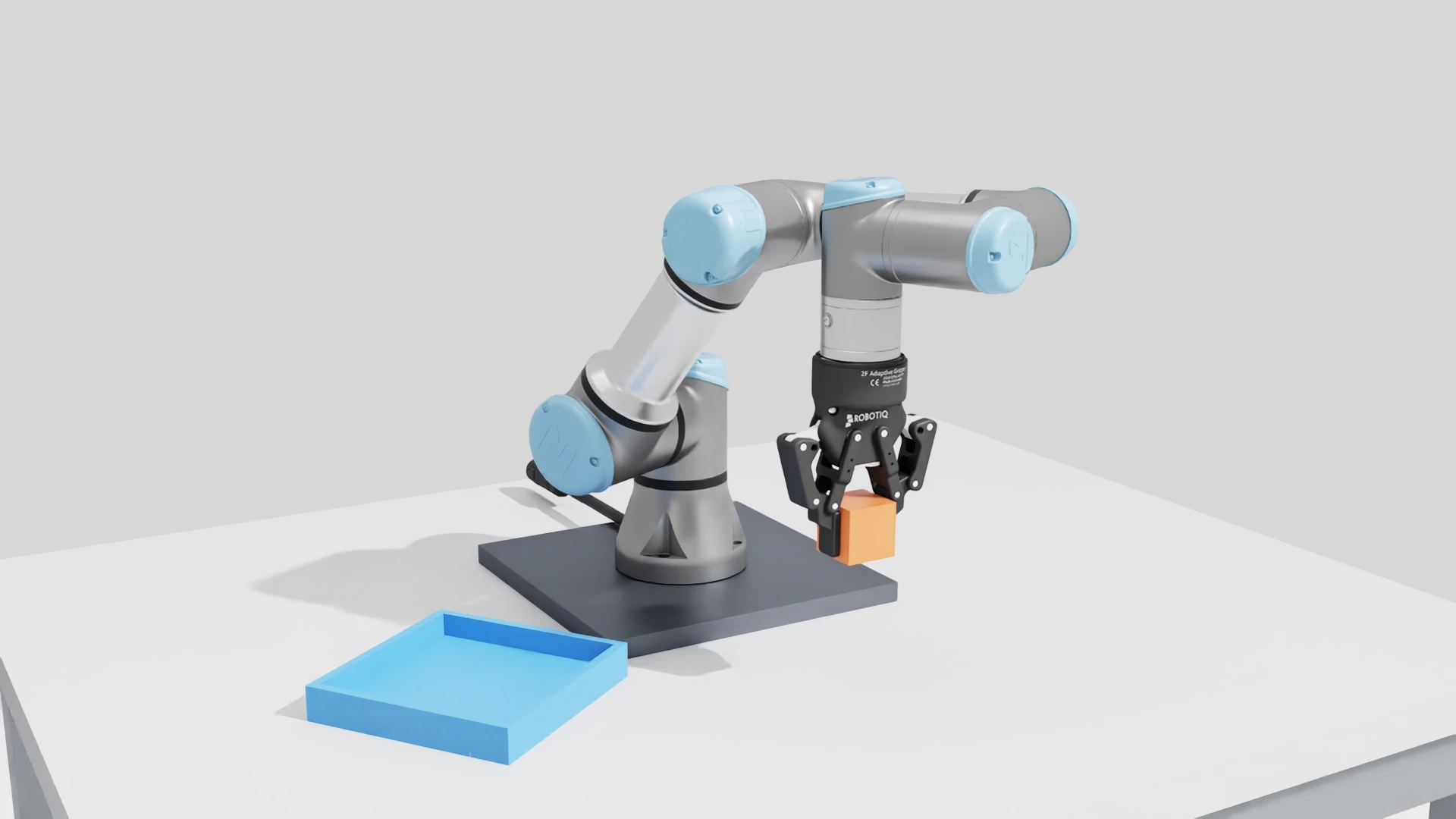
Correct at rest.
Jammed in motion.
The gripper worked on its own. Mounted to the UR3e, it would not fully reopen.
Isolate the cause
After the articulation merge, the gripper inherited the UR3e’s enabled self-collision. Controlled A/B tests separated collision behaviour from gravity: disabling self-collision restored the motion; removing gravity did not.
Make the smallest effective change
A self-filtered collision group contains only the 13 Robotiq colliders. Global articulation self-collision stays on, as do gripper contact with the cube and environment. No drive, mass or inertia tuning was needed for this fix.
| Measurement | Before filtering | Verified fix |
|---|---|---|
| Final open angle | 11.07° | 0.000° |
| Maximum mimic error | 2.01° | 0.0012° |
| Global self-collision | On | On |
Source: STEP5_PROGRESS, runtime diagnosis and 02_RUNTIME_PASS. This isolated open–close test is separate from the loaded pick-and-place run.
05 / PHYSICAL VALIDATION
Contact. Carry. Release.
Representative frames from the final capture.
One continuous, physics-driven task.
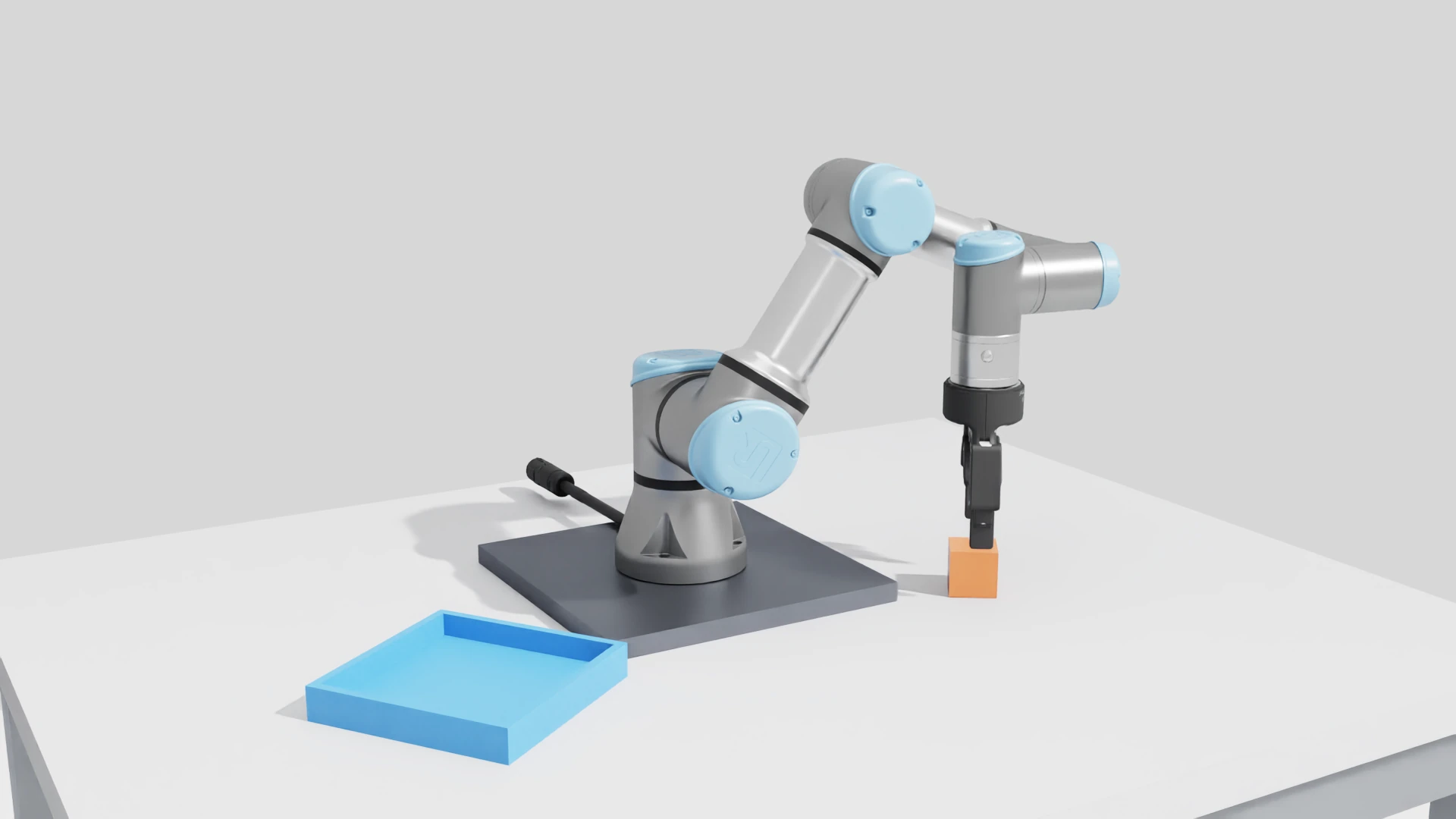
Approach
Joint drives bring the open gripper to the cube.
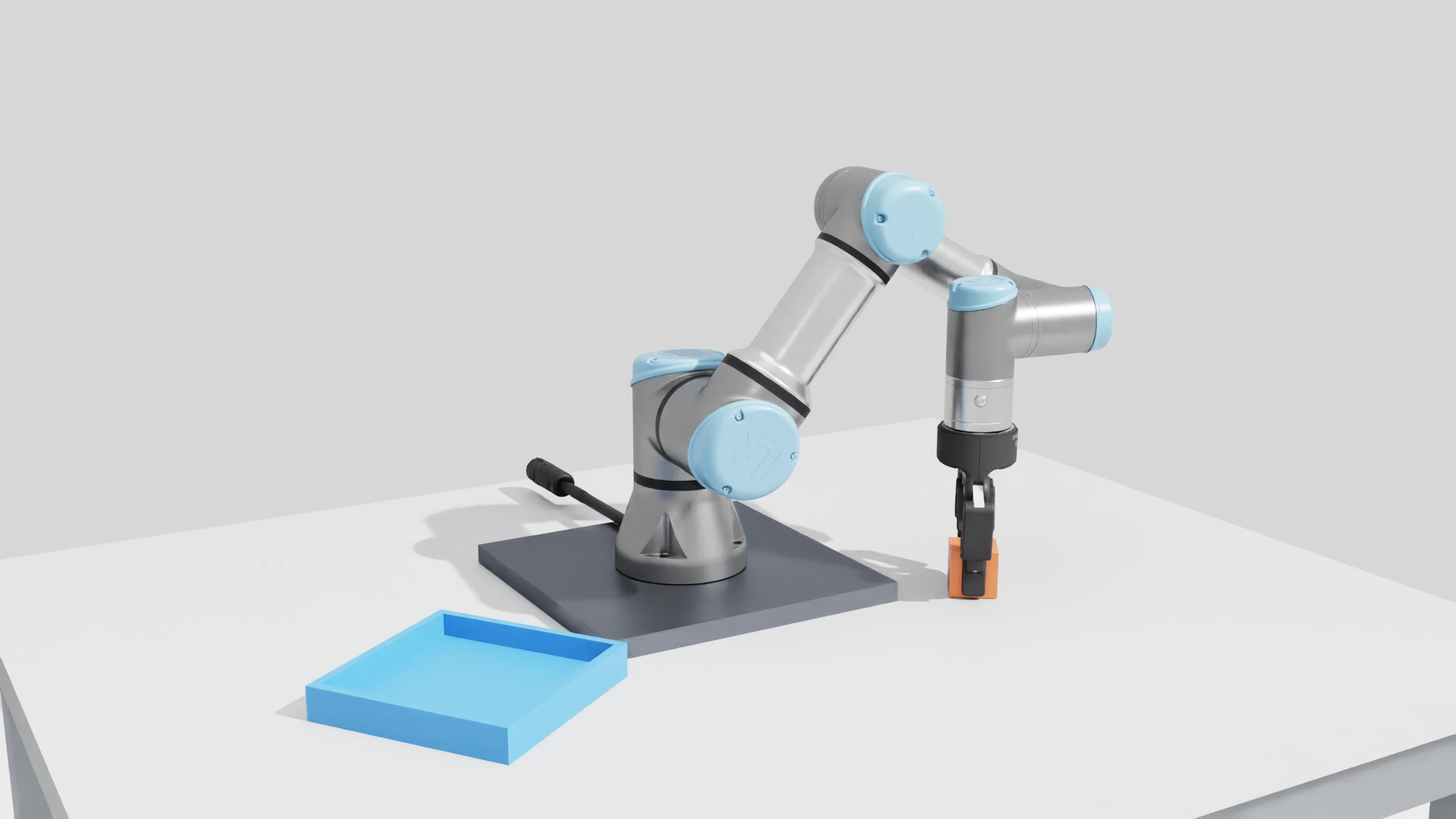
Grasp
The fingers close until physical contact stops their motion.
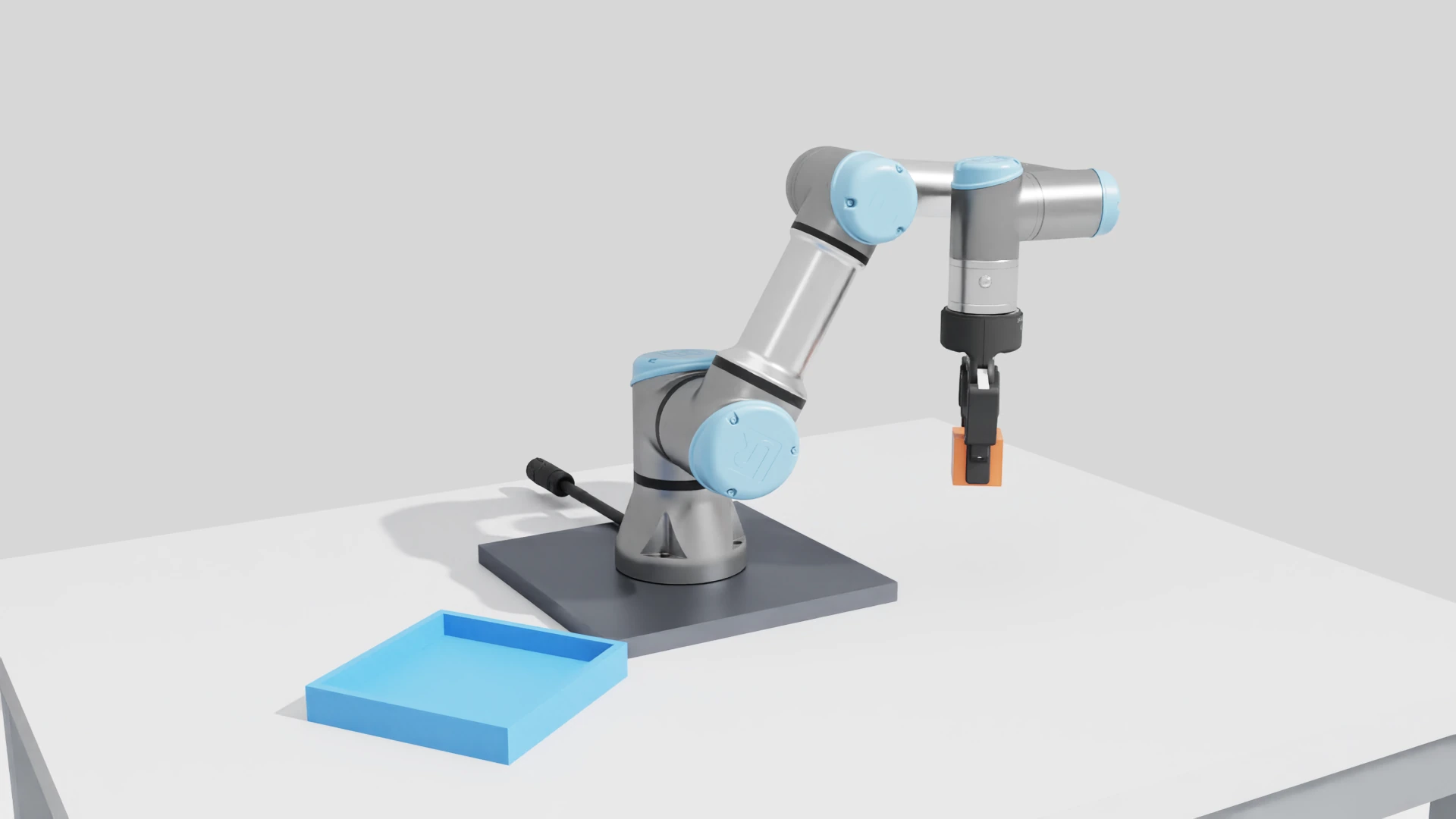
Lift
The cube clears the table, supported by the grasp.
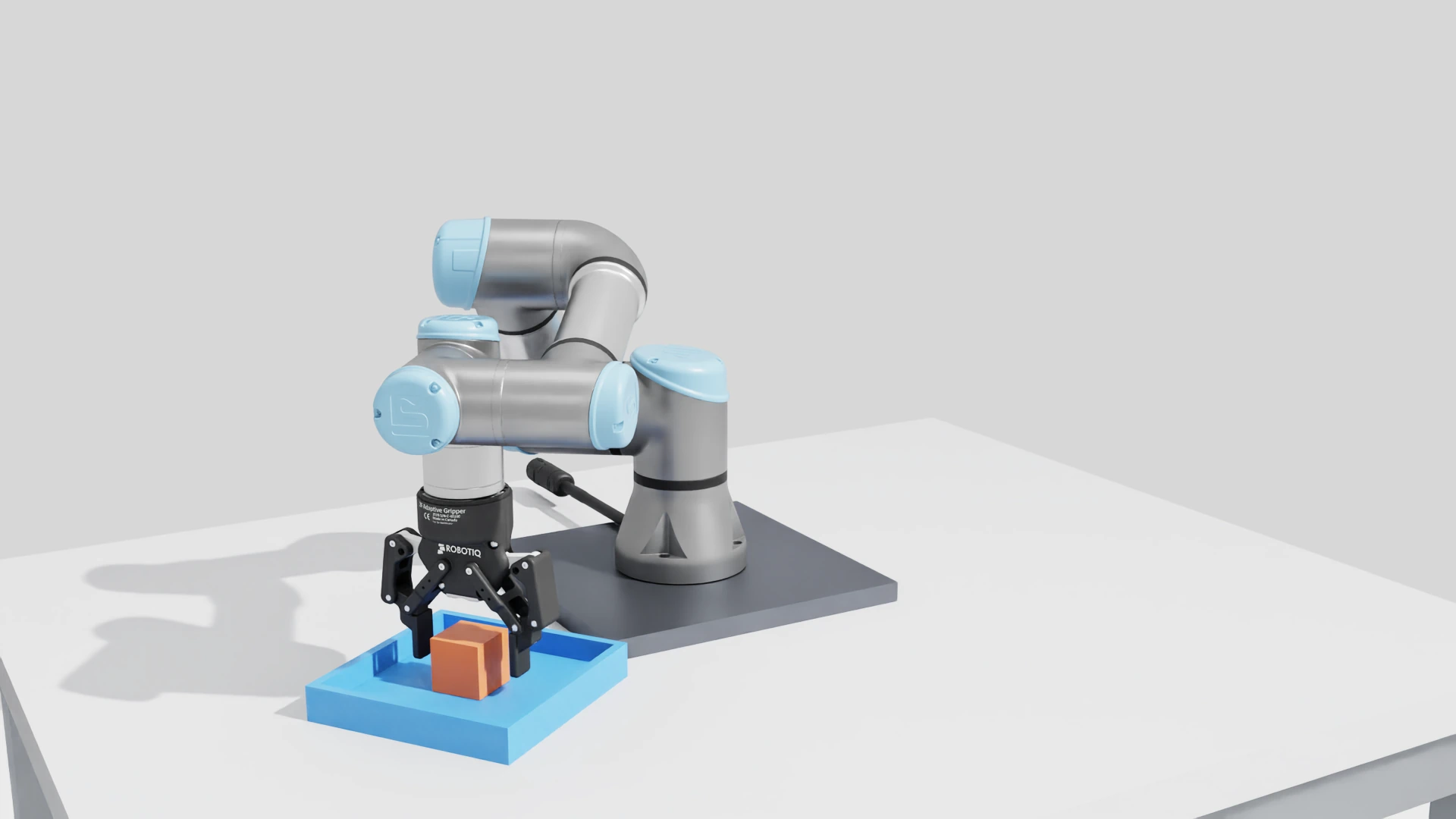
Release
Opening the gripper lets the cube settle into the tray.
The task passes.
The evidence stays with it.
All 14 timed segments passed. The final hero recording reproduced the verified run: 509.4 mm of physical transfer, a maximum 0.038 mm transfer slip, and a final cube position 1.30 mm from the tray centre.
The arm returned home within 0.04°. The record reports no penetration, NaNs or PhysX errors. The camera capture was a presentation-only pass; the task plan, source assets and validated checkpoints were preserved.
Validation scope: this cube, task layout and scripted motion at 240 Hz. Mass and friction are simulation assumptions, not calibrated measurements of a physical workcell. The demo mounts the gripper directly; a real adapter is not modelled.
Human judgement.
Agent-assisted execution.
A human-in-the-loop, agent-assisted workflow.
Direction & acceptance
Marko defined the workflow and simulation requirements, made artistic and technical judgements, directed debugging decisions, and remained responsible for QA and acceptance of major changes.
Execution & repeatability
Codex and Claude Code supported USD inspection, scripting, Python and Isaac Sim automation, repeatable validation, and numerical testing.
- Robot platform
- Universal Robots UR3e — CAD-derived asset prepared for this simulation workflow.
- Gripper asset
- Official Robotiq 2F-85 Isaac Sim asset ↗
Parallel-grip physics configuration, standard fingertips. Integrated here; model authored by Robotiq. - Workflow reference
- NVIDIA’s five-step SimReady workflow ↗
Adapted to the UR3e and this task. - Evidence
- Step 5 progress record, runtime verification, full-task validation and final hero capture, dated 10 October 2026.